
Faith seeking Understanding
Theology is faith seeking understanding. Studying it is to embark on a journey, never quite knowing where it will take us. We discover awesome things about ourselves, our world, and most importantly about God, the Creator of the universe.
This site contains resources which are freely shared in the hope that they will prove helpful to those seeking a deeper understanding of the Bible, theology, and apologetics.
The Bible is a dangerous and exciting book. When I was on the Romanian border during the communist era, I was asked “Do you have guns, drugs, pornography, bibles?” The Bible was considered a dangerous book, because it caused people to submit to a higher power and break free from the lies of communist propaganda.

“Your word is a lamp for my feet, a light on my path.” (Psalm 119:105).
Latest blogs

Daniel’s Seventy Weeks
One of the more challenging passages of the Hebrew Scriptures to interpret and understand is Daniel 9:24-27, the prophecy of the ‘seventy weeks’ or ‘seventy sevens’. Sam Storms writes,
“One might well argue that Daniel 9:24-27 is both the most complex and the most crucial text in either testament bearing on the subject of biblical prophecy. Its complexity is questioned only by those who have not studied it, or perhaps by those whose conclusions concerning its meaning were predetermined by unspoken theological commitments.” [1]
There have been many different explanations of what it means. Montgomery, in his commentary on Daniel, referred to the history of the exegesis of the passage as “the dismal swamp of O.T. criticism”![2] The present article explains some of the issues and suggests a credible interpretation the passage. (To continue reading go to Daniel’s Seventy Weeks .)
[1] Storms, page 71.
[2] Montgomery, page 400.
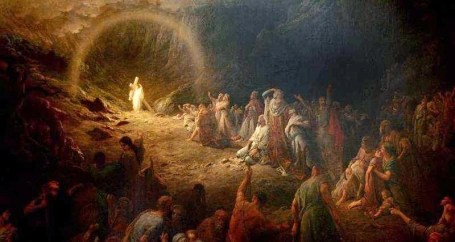
Who are “the spirits in prison?
Many Christians believe that, between his crucifixion and resurrection, Jesus went to Hades (the place of the dead) and preached to the people who had died in the time of Noah. This is called the Harrowing of Hell. But did this really happen? A key verse on which this teaching is based is 1 Peter 3:19, which reads, “in which he went and proclaimed to the spirits in prison”. The verse is considered to be one of the most difficult to understand in the New Testament. Commentators mention around 200 different interpretations.[1] Martin Luther wrote, “This is a strange text and certainly a more obscure passage than any other passage in the New Testament. I still do not know for sure what the apostle meant”.[2]
To continue reading click on this link – spirits in prison
Older Blogs – click below

 GareththePreacher.com